
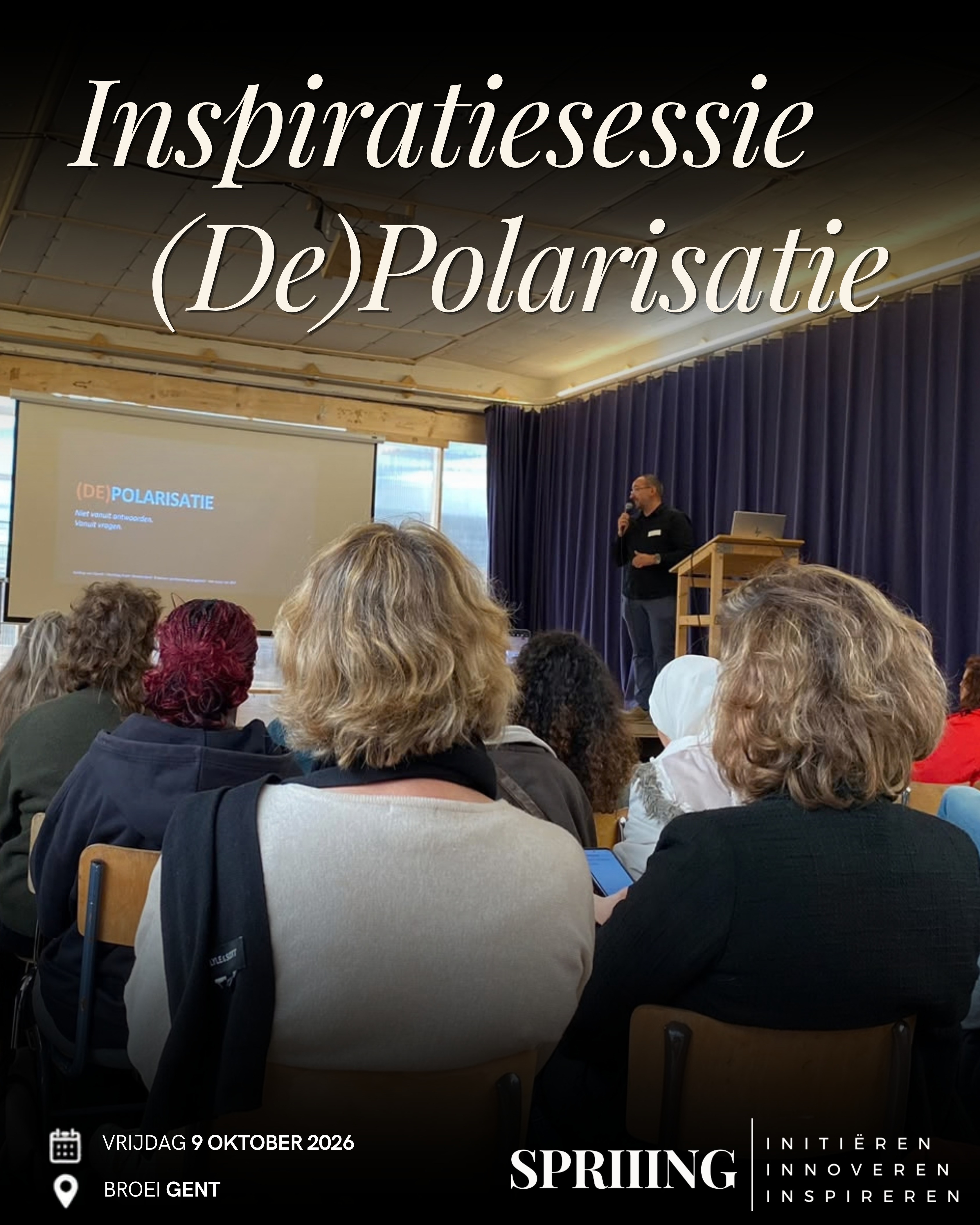
Conversation with Joseph El Bacha about young people, polarisation, music and society
Joseph El Bacha is a criminologist, former police inspector, communications expert and musician. Drawing on his roots, his experience in the field and his sharp view of society, he builds bridges between worlds that are often seen as being completely opposed to one another. In this intense but hopeful conversation, he shares his insights on young people, polarisation, fake news and the connecting power of music.


“From Youth Worker to Police Officer, Because I Wanted to Understand the System from the Inside”
“I grew up in Belgium with Lebanese roots. From an early age, I felt the need to understand how social systems work, especially when I saw how often young people came into conflict with the police and other authorities. I trained as a criminologist, but started out on the streets as a youth worker, mainly working on issues related to radicalisation. Then I decided: I want to understand the other side of the system as well. That is how I ended up joining the police — not an easy choice, but a necessary one.”
He did not want to be a pawn, but a bridge-builder. “Someone who understands the system, while also understanding the lived realities of young people. I tried to integrate my experience as a youth worker into the police context. That was not easy, but it shaped who I am.”

“Polarisation is uncomfortable, but it sets things in motion.”
Polarisation as a Mirror of a Divided Society
As a former communications expert at the Federal Prosecutor’s Office, Joseph encountered social tensions on a daily basis. “We live in a beautiful and diverse society, particularly in cities such as Antwerp. But at the same time, we have perhaps never been so divided.”
He identifies social media as an important factor. “Everything moves faster and becomes shorter, sharper and more emotional. People are influenced by algorithms, live in bubbles and increasingly see only information that confirms what they already believe. Nuance disappears.”
Yet he does not believe polarisation is inherently negative. “In the short term, it creates conflict, but in the long term it can force change. Look at George Floyd: young people took to the streets and demanded change. That is necessary. Polarisation is uncomfortable, but it sets things in motion.”
Young People Do Not Just Want to Be Heard — They Want to Be Part of the Conversation
Joseph sees every day how young people can feel excluded or misunderstood. “Especially in large urban contexts, young people experience frustration. There is very little public space available to them. Young people gather together, residents call the police, people begin to feel unsafe, and this leads to confrontation.”
But young people are not a problem group — they are a mirror of society. “We need to stop talking about young people and start talking with them. Give them a platform. Show them that it is okay to have doubts, to not yet have an opinion. Polarisation feeds the extremes, but the majority is in the middle, and that is the group we need to strengthen.”
Role models are crucial in this process. “Young people need people they can identify with, people who show them: it is possible. Not those chasing quick money or TikTok fame, but people who work hard, live according to their values and contribute to society. And yes, there are still far too few of those role models — especially in education, politics and the police.”
We Need to Equip Young People Against Superficiality
Joseph is critical of the influence of social media. “Young people are constantly overwhelmed by stimuli. Their attention spans are becoming shorter, and they quickly think they have found the truth. Fake news spreads incredibly fast. Algorithms push them into echo chambers.”
The psychological consequences can be serious. “We are seeing more loneliness, depression and even suicidal thoughts among young people. They can easily spend up to eight hours a day scrolling on their phones and receive notifications constantly. Meanwhile, they are losing the ability to read a book or have an in-depth conversation.”
His message is clear: “Education and youth work need to teach young people how algorithms work, how to check sources and how to think critically. Not by lecturing them, but by actively involving young people themselves.”

“We all live in bubbles. Our friends, the media we consume, our feeds — everything reinforces our own beliefs. That is why I say: go and talk to someone you do not understand. Listen for longer than ten seconds. Read beyond the headline. Look for nuance.”
Chaos Is a Ladder. Conflict Can Create Opportunities for Growth.
As a trainer in crisis communication, Joseph believes that conflict can also create opportunities. “When people are strongly polarised, that is precisely the moment when you should try to introduce another perspective. Not necessarily to convince them immediately, but to expand the space in which they can think.”
“We all live in bubbles. Our friends, the media we consume, our feeds — everything reinforces our own beliefs. That is why I say: go and talk to someone you do not understand. Listen for longer than ten seconds. Read beyond the headline. Look for nuance.”
Music as a Bridge to the Heart
Alongside his social engagement, Joseph is also active as a musician and DJ. With his band, Bacha & the Band, he performs at weddings, corporate events and festivals, including the iconic Tomorrowland. The band consists of talented musicians with roots in Belgium, Congo, Lebanon and Spain. This not only creates a unique musical mix, but also gives the stage a visibly diverse and inclusive character.
He describes it as a form of activism. “When we perform Arabic-inspired music as a diverse band for an audience that is not familiar with that culture, people experience it in a positive way. That is incredibly valuable. They gain a different perspective on what migration and inclusion can look like. Not only adults, but young people too can see that it is possible. That you are allowed to exist, in your own beautiful way.”
Through Bacha & the Band, he also invests part of the proceeds in young people through initiatives such as music, photography and dance lessons.

“Stop polarising. Choose connection. It is more difficult, but so much more valuable. There are more allies than you think.”
At the end of the conversation, we ask Joseph what he would say to young people trying to find their place in this complex world.
“It is difficult to be young today. We should acknowledge that. But there are role models. Find them. Surround yourself with people who genuinely want the best for you. Think. Stay true to your values. Life is about more than quick success. Choose depth, connection and meaning.”
And his message to policymakers?
“Stop polarising. Choose connection. It is more difficult, but so much more valuable. There are more allies than you think.”

Leave a Reply