
How can we create space for different opinions without allowing differences to turn into divisions? And how can we translate insights about polarisation into practical activities and methods?risatie naar concrete werkvormen?
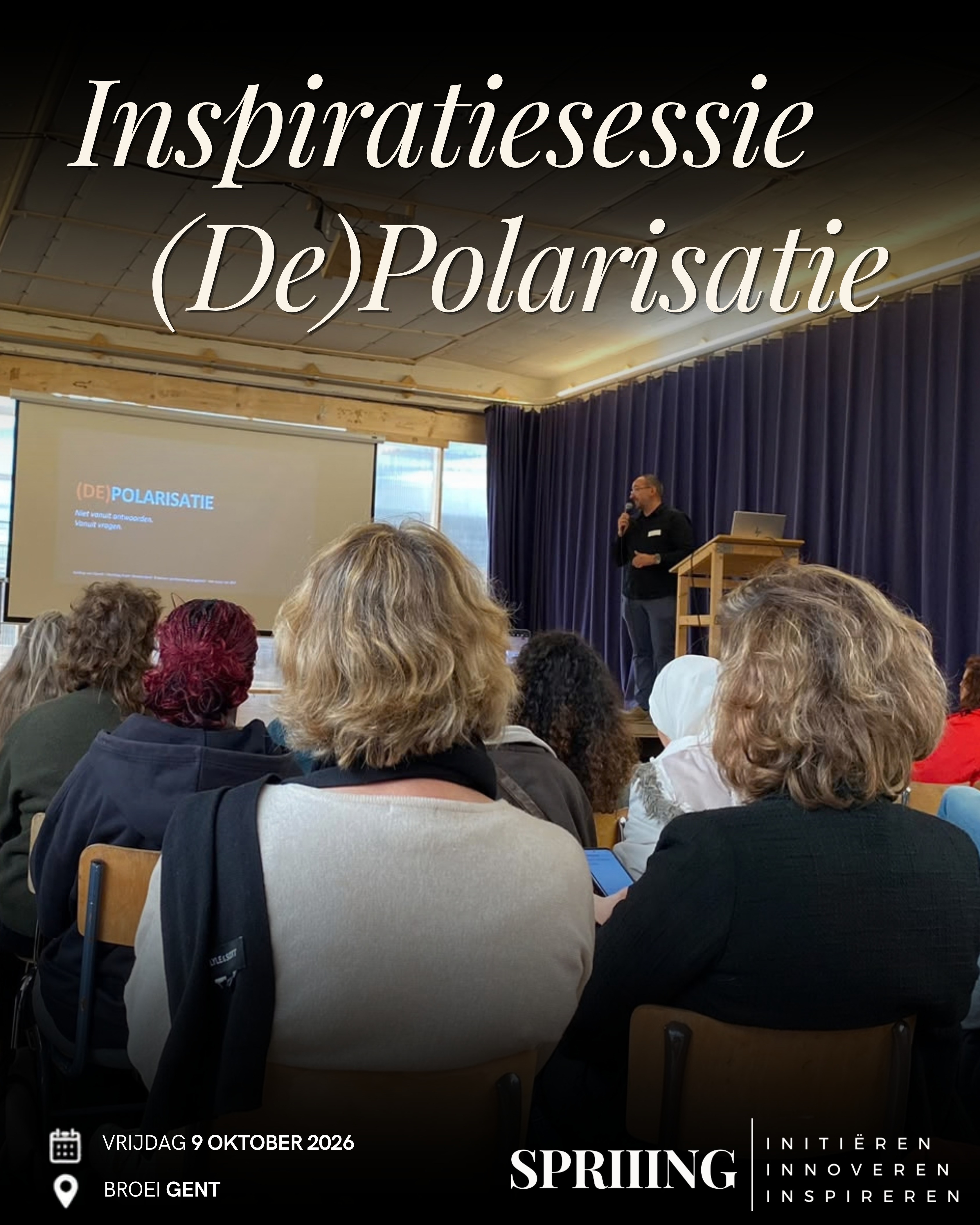
On Friday, 9 October 2026, we brought together professionals from different sectors at BROEI in Ghent for our (DE)Polarisation Inspiration Session. It was an afternoon filled with connection, exchange, new insights and, above all, practical tools to help participants put these ideas into practice.
From Research to Practice
The inspiration session marked an important milestone in our (DE)Polarisation project, in which we work together with young people, youth workers and experts to explore how polarisation develops and how we can deal constructively with differences in society.
During the introduction, we reflected on the journey we have taken over the past months. From conversations with young people and experts to developing and testing educational methods and activities, we shared the different outcomes of our project: the workbook, card game, online toolbox and the documentary Waar het schuurt.
Our ambition is to ensure that the knowledge gained through this project does not remain within the project itself, but becomes accessible and useful to everyone working with young people and groups.


Understanding, Recognising and Discussing Polarisation
Following the introduction, participants took part in interactive workshops facilitated by the Hannah Arendt Institute and StampMedia.
Chris from the Hannah Arendt Institute introduced participants to VRT’s EDUbox on us-versus-them thinking. Through interactive exercises, they explored how group dynamics and different perspectives influence the way we think. A central question was how to facilitate conversations when opinions clash, without allowing discussions to reach a deadlock.
Margot from StampMedia focused on online polarisation. Social media play an important role in how young people receive information, form opinions and perceive other groups. The workshop explored media representation, online dynamics and the role of professionals. How can we engage young people in conversations about polarising content? And what can help them develop a more critical approach to online information?
From Spriiing, we demonstrated how youth workers, teachers and other professionals can use our card game and workbook to encourage constructive and connecting communication. We showed how the different exercises and conversation prompts can help participants discuss differing opinions, actively listen to one another and create space for multiple perspectives.
The emphasis was on practical application: how can these materials be used during a workshop, group discussion or activity with young people?
During the joint reflection and networking session, participants had the opportunity to exchange experiences, share ideas and build connections across different professional fields.
A Toolbox That Continues to Make an Impact
One of the main objectives of the inspiration session was not only to inspire professionals, but also to provide them with concrete tools they could use in their own practice.
All participants had the opportunity to explore our workbook and card game, developed to make conversations about polarisation, us-versus-them thinking, constructive communication and critical thinking more accessible.
Through our online toolbox, anyone can continue exploring these resources. The platform offers educational methods and activities for different age groups and target audiences. Users can put together their own workshops and download the accompanying activity sheets. The workbook and card game are also available online.
The Conversation Continues
The inspiration session reinforced our belief in the importance of bringing together people from different professional backgrounds to address this topic. Polarisation is not a challenge that can be tackled by a single organisation or sector. It requires knowledge sharing, collaboration and, above all, a willingness to keep engaging in dialogue.
We look back on this inspiring afternoon with great satisfaction and would like to thank all participants, workshop facilitators and partners for their valuable contributions.
Through (DE)Polarisation, we will continue developing accessible educational methods, training opportunities and knowledge-sharing initiatives. Organisations interested in using our materials, organising a workshop or exploring opportunities for collaboration are always welcome to get in touch.



Leave a Reply